New Zealand Motels
We have a great selection of New Zealand motels for you to book from directly. Simply select the motel of your choice and you can email or phone them directly for a booking. We have both North Island motels & South Island motels to choose from, all on one convenient site. There are many options available including 3 or 4 star motels & with our preferred listing you can view all the amenities that they have to offer. New Zealand enjoys warm summers from November to March while the prime ski season is June to September. Most of the New Zealand motels are very reasonably priced & are generally hosted by couples ensuring you receive good personal service. We hope you have a safe & enjoyable stay while traveling throughout New Zealand.
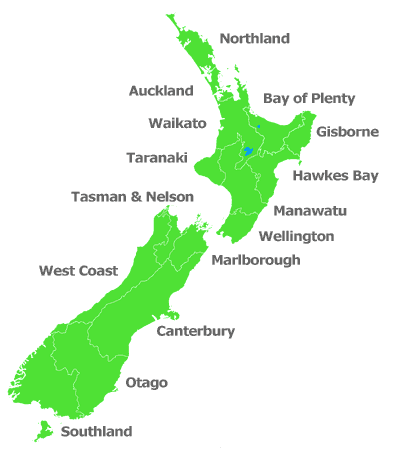
Click on the New Zealand Map
to Search for Motels by Region
Auckland
Auckland, also known as "City of Sails" due to its vast waterways & marinas of yachts is New Zealand's largest city. Motels in Auckland mainly boast 3 & 4 star ratings & budgets to suit all. It has the largest Polynesian population in the world and the tallest building in the southern hemisphere. For accommodation there are over 150 quality Auckland motels you can book with directly.Bay of Islands
The Bay of Islands motel's are set in the sub tropical North of NZ. A great place for fishing, diving, swimming with the dolphins & sightseeing. The main towns include Paihia, Kerikeri, Russell and Waitangi where the Treaty of Waitangi was signed between Maori and Britain in 1840. With so many things to see & do you should allow at least a week when booking your motels in The Bay Of Islands.Coromandel Peninsula
The Coromandel is beautifully rugged with lovely beaches, stunning scenery and lush native bush. Over 70 Coromandel motels are spread over the region and although sparsely populated most of the year, it is a popular location for Kiwis and overseas visitors all summer. The major coastal towns of Coromandel Township, Thames, Tairua, Whangamata, Waihi and Whitianga all have quality motel accommodation to choose from.Gisborne
The Gisborne Region has over 30 motels to choose from for your holiday enjoyment. Gisborne City has the main population of 30,000 and is famous for being the first place in the world to see the sun each day. It has fabulous beaches including Midway and Waikanae, and the amazing Lake Waikaremoana with its great trout fishing. Choose a motel in Gisborne now for an amazing time.Hamilton
Hamilton is the largest inland city in New Zealand, the fourth biggest overall & with plenty of motel accommodation for visitors. It is built around the Waikato River with a bustling inner city scene and large University population. A major agricultural service hub for the farms of Waikato, Hamilton also serves as a modern, diverse city with over 40 motels in Hamilton City to select from.Hastings
There are over 25 motels in Hastings District in The Hawke's Bay to select from. It is often referred to as the Fruit Bowl of the country due to its many orchards and large horticultural industry. It is also famed for its many vineyards, the fine red wines & the Ganet Colony at Cape Kidnappers. Hastings enjoys long, hot summers plenty of motel accommodation and has a strong tourism sector.Manawatu
There are over 100 motels in Manawatu. It is the hub and support area for all rural in the Southern half of the North Island. Palmerston North is the main city for the Manawatu which boasts some great outdoor activities including some amazing gardens and if you are a little more energetic, it is a great area to go cycling. Manawatu rugby has a long and proud history and you can view this at their museum.Masterton
Masterton is both a Town and District in the Wellington Region of New Zealand. It is well known for its adventure tourism and sport including hot air ballooning, fishing, surfing and jet boating. There are a lot of nature tracks for trampers and walkers, plus the seal colony at Cape Palliser, the Putangirua Pinnacles, Mount Holdsworth and the Mount Bruce Conservation Centre. Plenty to plan when choosing a motel in Masterton.Mount Maunganui
Mount Maunganui is a very popular holiday destination because of its beautiful white beaches, safe swimming and good surf beaches. The city has a nice modern feel to it with a relaxed atmosphere, good shopping and many cafes to choose from. If you are wanting to book a motel in Mount Maunganui during the Christmas holidays, make sure you book early as its very popular at this time of year.Mount Ruapehu
Famous for its eruptions, natural beauty and skiing Mount Ruapehu is one of the world's most active volcanoes. Turoa and Whakapapa are the two main ski fields on the mountain. It is the biggest of three volcanoes in Tongariro National Park and forms a spectacular backdrop to the town of Taupo on a clear day. There are plenty of motels in National Park as well as motels in Ohakune to base your Skiing or tramping holiday.Napier
Napier is in the popular wine growing area of Hawke's Bay and is known as the Art Deco Capital of the world after being almost completely destroyed by an earthquake in 1931. It was rebuilt mainly in the Art Deco style, making it quite unique. There are over 40 motels in Napier, most within 8 kilometres from Napier City Centre. It has a deep water port busy with both container ships and massive cruise liners bringing tourists from around the world.New Plymouth
New Plymouth has over 50 motels & is the main city of the Taranaki Region. It is the main service centre for the regions economic mainstays of gas exploration, dairy farming and tourism. Views of Mount Taranaki from New Plymouth can be stunning when covered in snow and some beaches are popular for surfing. Book your New Plymouth motel accommodation for a memorable stay.Northland
Northland is one of New Zealand's top tourist destinations. It's temperate warm climate means it enjoys above average temperatures and with this a huge array of things to do. This can include the beautiful Bay of Islands, the Kauri Forests, and great fishing on both the West and East Coast. It has a lot of history with the original capital being at Waitangi.There's about 200 Motels in Northland to choose from.
Palmerston North
Palmerston North is the biggest city in the Manawatu Region of the North Island with over 50 motels to select from. Flowing through the city is the Manawatu River & with a population of about 80,000, Palmerston North boasts many beautiful gardens and lakes. As it is a major hub for the lower North Island there is a great selection of motels Palmerston North wide for you to select from.Rotorua
Nestled on the shores of Lake Rotorua with a population of around 60,000 Rotorua is a popular tourist destination and is home to geothermal activity like boiling mud, geysers and hot springs. Maori history and culture is also a distinctive and important aspect of the city. Rotorua is an inland city in the Bay of Plenty Region of the North Island. The motels in Rotorua will be happy to help or suggest tours & things to do.Taranaki
Taranaki sits midway on the North Island on New Zealand's West Coast. It has an unspoiled wild coastline that features some of the best surf beaches in New Zealand. The main city is New Plymouth which is a city of approximately 40,000 and has spectacular views of Mount Taranaki. This provides many attractions including walking tracks for hiking and tramping. There are over 50 motels in Taranaki.Taupo
The inland town of Taupo is situated on the shores of New Zealand's biggest lake, Lake Taupo. It is a top NZ tourist destination, boasting world class trout fishing, breathtaking scenery, hot mineral pools and many outdoor activities like tramping, boating and climbing. It has a population of around 20,000 and its main economic drivers are tourism and forestry. There are more than 40 motels in Taupo, many of them on or close to the shores of Lake Taupo.Thames
Thames is the 'Gateway to the Coromandel' and is on the South West coast of the beautiful Coromandel Peninsula in the Waikato Region of the North Island. Thames started off as a gold mining town in the 1860's and in the late 1800'was the biggest town in New Zealand. Enjoy the many attractions and the rich history of this gold mining town.There are plenty of motels in Thames to choose from.
Tauranga
One of the fastest growing cities in New Zealand, the costal and port city of Tauranga is another popular tourist destination and many migrants have also settled here. From the beautiful beaches of Mount Maunganui to the rich horticultrual land spanning out to Te Puke, Tauranga is known for its climate and lifestyle. Choose from the many motels in Tauranga and enjoy the boutique shops, cafes, gallerys, beaches and scenery.Waiheke Island
Part of Auckland Super City, Waiheke Island is close enough to the action of Downtown Auckland to commute by ferry each day but far away enough from the hustle and bustle to be another world in itself. Waiheke has some of the nicest beaches anywhere and is home to fantastic vineyards as well as native bush and wildlife and even has its own warm, dry micro-climate. Choose from the dozen or so motels on Waiheke Island.Waikato
Waikato is the home to a large rural catchment area. Waikato's main city is Hamilton and this hosts events such as the Waikato balloon festival, the national field days for farmers and rowing regattas on Lake Karapiro. Waikato also has one of New Zealand's most iconic surf beaches being Raglan. This lies on the West Coast and hosts some of the best sets of waves that surfers could imagine. There are well over 100 motels in Waikato.Wairarapa
Wairarapa is the great escape for Wellingtonions with a relaxed, ambient field to all things to see and do in the area. It includes visiting some of the great vineyards, taking in a hot air balloon flight, or visiting the historic town of Greytown with its beautifully restored cottages and a wealth of things to do including visiting the boutique shops or simply having a latte in one of the cafes. There are plenty of motels in Wairarapa to choose from.Waitomo
Waitomo is in the south of the Waikato Region in the North Island is home to the famous Waitomo Caves, one of the best known natural wonders in New Zealand. At around two million years old, these ancient limestone formations attract around 400,000 visitors every year who come to see the glowworms as well as stalactite and stalagmite formations. Click here to view the selection of motels in Waitomo on offer.Wanganui
There are over 20 motels in Wanganui to select from. It is situated close to the mouth of the awesome Wanganui River which originates from high up on Mount Tongariro. Wanganui district has a population of around 50,00, and a particularly temperate climate. Farming benefits from the fertile lands around the actual city and river, while tourism is also important to the economy of Wanganui.Wellington
Wellington City is the Capital of New Zealand and situated at the southern tip of the North Island. Although it gets a bit windy at times, it is a vibrant and cultured city, highly ranked worldwide as a tourist destination as well as for its own high living standards. Both the CBD and residential suburbs are nestled in the hills around Wellington Harbour. There's about 100 motels in Wellington to choose from.Whakatane
Whakatane is a District as well as a City in the Eastern Bay of Plenty. The town is situated by the Whakatane River Mouth where many boats are moored and many more are launched to sea to enjoy the great fishing and other sea activities in the area. Its economy is a diverse mix of forestry, paper production, farming, fishing, horticulture and touism. Whakatane is also the gateway to the East Cape, so Whakatane motels are a great place to rest up before heading off.Whangarei
The Whangarei District is in the Northland Region of the North island. Well known for its many pristine beaches, harbours and islands, its a sub tropical wonderland for diving, boating and other sea activities. The City of Whangarei is New Zealand's northernmost with its own fantastic harbour. Ecomnomic strengths are in boat building, forestry, agriculture & tourism. There are about 40 motels in Whangarei.Blenheim
Blenheim is the biggest town in the Marlborough Region of the South Island with a population of around 30,000. Blenheim itself is surrounded by vineyards, world famous for their production of Marlborough Sauvignon Blanc Wine. The rural based economy is fairly diverse with a mix of animal & crop farming, fishing, mussel farming, grape growing and tourism. Choose from over 20 motels in Benheim.Canterbury
Canterbury is the South Island's most populated province. The city of Christchurch is its capital with over 400,000 population. It includes such great destinations as the french settlement town of Akaroa and the port town of Lyttleton with all its settler cottages. Alternatively you can head in land Canterbury and go skiing on Mount Hutt or try some hot pools in Hamner Springs.There are about 200 motels in Canterbury to choose from.Christchurch
Christchurch is the largest city in the South Island and second only to Auckland in New Zealand. It is the 'gateway' to the South Island thanks to its international airport and proximity to some of the best and most diverse sights & activities anywhere in the country, including ski resorts, whale watching, wineries, bungy and other adventure activities. There's over 140 motels in Christchurch to choose from.Dunedin
Dunedin is nestled around the beautiful Otago Harbour, which along with the surrounding hills is what's left of an extinct volcano. It is the largest city and main hub in the Otago Region. Otago University was New Zealand's first and around 1900 Dunedin itself was the nations biggest city. Dunedin is steeped in history and culture. View motels in Dunedin here.Fiordland
In the far south west of the South Island, Fiordland is one of the natural wonders of New Zealand and the World. It has World Heritage status to back this up with a string of amazing destinations including Lake Te Anau, Lake Manapouri, Doubtful Sound, Milford Sound, Mitre Peak, Fiordland & Mount Aspiring National Parks and the famous Milford Track. Check for Fiordland motels here.Greymouth
Greymouth is located at the mouth of the Grey River, on a narrow coastal plain by the abse of the Southern Alps. On a clear day, Mount Cook can be seen to the south from near the town. The mouth of the river divides the town into the three areas of Blaketown, Karoro and Cobden. There are about 20 motels in Greymouth to choose from.Hanmer Springs
Hanmer Springs is Canterbury's small alpine village approximately 90 minutes drive west of Christchurch. It is a very popular destination with all the locals because of the very popular Hanmer Springs hot pools. These have a lot of sizes of pools with varying scales of heat depending on your requirements. Hanmer Springs has also become a very popular destination with overseas tourists. Click here to see the results for motels in Hanmer Springs.Invercargill
Invercargill is the southernmost city in New Zealand with a population of around 50,000. It is the ecomomic hub of the Southland region. Surrounded by sea to the south and the fertile farmlands of the Southland plains everywhere else, its not surprising that dairy farming and fishing are its main economic drivers. Find a motel in Invercargill here.Kaikoura
Kiakoura is a costal town about halfway between Picton & Christchurch on the South Island's east coast and is on the Tranz Coastal Pacific train route, one of the most scenic anywhere on earth. It is famous for its whale watching activities and also hosts seal colonies and roadside crayfish caravans. There is a great variety of motels in Kaikoura to choose from.Marlborough
Marlborough boasts one of the finest wine growing regions in New Zealand. Located half an hour south of Blenheim it has some of the finest Sauvignon Blanc, Pinot Gris and Chardonnay wines available. There are numerous wine tasting tours of the fine vineyards in this area and much boutique accommodation. Browse the motels in Marlborough here.Mount Cook
Mount Cook National Park is home to Mt Cook, New Zealand's highest mountain. The mountain forms part of the Southern Alps, an alpine fault caused by two continental plates pushing together. The National Park is one of four in the area that combine to make a UNESCO World Heritage Site and features many more mountains, glaciers and lakes. Find a motel in the Mount Cook area.Nelson
Nelson is both a District and City within the Nelson-Tasman Region in the north of the South Island. Fondly known as 'The sunshine capital of New Zealand' due to its long sunshine hours, the city and area have a lot to offer including world class fly fishing, white water activities, kite surfing, biking, wineries and three National Parks to boot. There are loads of great motels in Nelson to choose from.Oamaru
Oamaru lies on Canterbury's South Coast. A beautiful boutique town, there are some amazing local, natural wonders. These include the cathedral like limestone formations which like the world famous Moeraki Boulders are an absolute must see. The Oamaru Blue Penguin Centre is a wonderful attraction where you can get up close and learn a little bit more about these birds. Choose from these motels in Oamaru for your visit.Otago
The region of Otago is the historical home to much of the early turn of the century gold mining that was carried out. Much of the gold mining was carried out in harsh conditions around Central Otago, Cromwell and Queenstown. While Dunedin is the main city of Otago, boasting beautiful buildings and history, Queenstown has become a very popular tourist destination for skiing. There are well over 100 motels in Otago.Picton
Picton is a picturesque town of about 3,000 nestled at the head of Queen Charlotte Sound, part of the breathtaking Marlborough Sounds at the northwest tip of the South Island. It is the South Island port for the passenger & vehicle ferries that cross the Cook Straight between Picton & Wellington. Choose from a wide variety of motels in Picton.Queenstown
Queenstown is an all season tourist wonderland with amazing scenery and activities as diverse as skiing, bungy, swimming, rafting and sightseeing. The town itself is full of things to do and places to eat and stay. It is situated on the shore of the picturesque Lake Wakatipu with a dramatic mountain backdrop in the Otago Region of the South Island. Book early as motels in Queenstown fill up quickly in the high season.Southern Alps & Lakes
This is New Zealand's most popular tourist destination. This region boasts breathtaking scenery and a huge range of thrill seeking activities such as bungee jumping, jet boating, white water rafting to name a few. Queenstown is word renown however, other popular destinations include Te Anau, Arrowtown, Wanaka and Lake Tekapo. The mountains are spectacular, both in summer and winter. Book a motel in the Southern Alps and Lakes area and prepare for a great time.Southland
Southland is New Zealand's Southern most region. Invercargill which is Southland's largest city serves as support logistics for all the neighbouring rural community. The Catlins is New Zealand's wetlands crown jewel, it has been protected, preserved and allowed for protected fauna, birds and wild life to thrive in a protected and natural environment and is must see when visiting Southland. View the selection of motels in Southland here.Stewart Island
Stewart Island is about 30km south of the South Island of New Zealand & has a population of about 400. Over 80% of the prestine forest and bush covered Island is Rakiura National Park. It is well known for its majestic sunsets and views of the Southern Lights and is a unique bird watching destination. The main economic drivers are tourism and fishing. See the motels on Stuart Island here.Tasman
Tasman is the the summer playground at the top of the South Island. It is home to some of New Zealand's most protected waterways and national parks so when you are visiting Tasman you will be able to enjoy such activities such as mountain biking, caving, kayaking and hiking. Make sure when you visit Tasman to spend time in Nelson which is a very popular boutique, waterside city. Choose from the many Tasman motels here.Timaru
Timaru is a beautiful ambient town on the Southern Coast of Canterbury. From the picturesque historical town with wonderful architecture you can take in the striking views from Carline Bay over to the snow clad mountains. For the adventurous, you can head on to one of the in land lakes for sailing and water skiing or go to the Timaru International Motor Raceway for Motor Sports. There are plenty of quality motels in Timaru to choose from.Wanaka
Wanaka is a fast growing resort town on the shore of Lake Wanaka in the Otago Region of the South Island. It is an adventurists dream location with adventure activities abound, including rafting, kayaking, lake fishing, hiking, biking, water skiing, sailing during the summer and of course snow skiing during the winter. Choose from the great selection of motels in Wanaka.West Coast
West Coast is New Zealand's natural destination with reverting views of the Tasman sea and natural wonders that Greymouth, Westport and the region have to offer. There is the world famous Punakaiki rock formations, wonderful national park beach forests and a rich history in the West Coast's mining past. It only has a small population and is relatively spread out but there are still plenty of motels on the West Coast to stay at during your stay to this lovely area.Westport
Westport is a town of around 5,000 people in the West Coast Region of the South Island. The town is situated at the mouth of the Buller River. In its earlier days, Westport's economy revolved around gold and coal mining but now its fishing, dairy farming, coal mining and tourism.There are more than ten motels in westport.TOP LOCATIONS
North Island Motels
Auckland Motels
Bay of Islands Motels
Coromandel Motels
East Coast Motels
Gisborne Motels
Hamilton Motels
Hastings Motels
Manawatu Motels
Masterton Motels
Mount Maunganui Motels
Mount Ruapehu Motels
Napier Motels
New Plymouth Motels
Northland Motels
Palmerston North Motels
Rotorua Motels
Taranaki Motels
Taupo Motels
Thames Motels
Tauranga Motels
Waiheke Island Motels
Waikato Motels
Wairarapa Motels
Waitomo Motels
Wanganui Motels
Wellington Motels
Whakatane Motels
Whangarei Motels
South Island Motels
Blenheim Motels
Canterbury Motels
Christchurch Motels
Dunedin Motels
Fiordland Motels
Greymouth Motels
Hanmer Springs Motels
Invercargill Motels
Kaikoura Motels
Marlborough Motels
Mount Cook Motels
Nelson Motels
Oamaru Motels
Otago Motels
Picton Motels
Queenstown Motels
Southern Alps & Lakes Motels
Southland Motels
Stewart Island Motels
Tasman Motels
Timaru Motels
Wanaka Motels
West Coast Motels
Westport Motels